A Comprehensive Overview to the Different Types and Applications of Aluminum Castings
Aluminum castings are important elements in numerous industries, recognized for their lightweight and durable buildings. Various casting methods, such as sand, pass away, and financial investment casting, deal distinctive advantages tailored to certain applications. Recognizing these procedures is essential for choosing the right approach for a job. Each strategy has its one-of-a-kind benefits, affecting style and manufacturing choices. The exploration of these approaches discloses a deeper understanding right into their impact on modern-day manufacturing.
Introduction of Aluminum Castings
Aluminum castings are crucial elements in various markets, understood for their lightweight and corrosion-resistant residential properties. These castings are produced through processes that enable intricate styles and high dimensional accuracy. The convenience of aluminum makes it a suitable choice for a range of applications, from auto parts to customer electronics. As a result of its outstanding thermal and electric conductivity, aluminum is additionally preferred in electrical real estates and warmth sinks. Furthermore, aluminum castings can be treated with different surface finishes, improving their aesthetic appeal and toughness. The product's recyclability contributes to its sustainability qualifications, making it an eco pleasant choice. Additionally, the schedule of different aluminum alloys permits producers to customize the mechanical residential or commercial properties to specific demands, giving improved strength or boosted resistance to wear. On the whole, aluminum castings play a substantial function in modern-day manufacturing, contributing to the performance and efficiency of many products throughout varied fields.
Sand Casting: Refine and Applications
While various casting methods exist, sand casting continues to be among one of the most commonly utilized strategies due to its simplicity and flexibility. This process includes producing a mold from a mix of sand and a binding agent, allowing for the manufacturing of complex shapes with high dimensional precision. The aluminum is melted and poured right into the mold, where it takes the preferred type as it cools down and strengthens.
Sand casting is especially reliable for producing large components and reduced to tool volume runs, making it appropriate for numerous sectors, including automobile, aerospace, and durable goods. Its convenience permits the casting of elaborate styles, accommodating diverse specs. In addition, sand mold and mildews can be recycled several times, boosting cost-effectiveness. The ease of sourcing products and the relatively low setup expenses better contribute to its extensive adoption. Generally, sand casting plays a pivotal function in the aluminum casting landscape, promoting development and effectiveness.
Die Casting: Advantages and Makes use of
Die casting offers numerous advantages that make it a preferred approach for creating aluminum parts in different industries. This procedure permits high-volume manufacturing with remarkable dimensional precision and surface area coating. The quick solidification of aluminum throughout die casting leads to a strong and resilient product, reducing the need for considerable machining or finishing procedures.
In addition, pass away casting allows the manufacturing of intricate shapes and elaborate designs, which can be testing to achieve with other casting techniques. The effective use of products lowers waste, making it a cost-efficient solution for producers.
Applications of die casting period numerous markets, including auto, aerospace, and customer electronics, where light-weight and high-strength components are crucial. In general, die casting sticks out for its capacity to deliver quality, effectiveness, and flexibility in aluminum part production, strengthening its duty in contemporary manufacturing practices.
Investment Casting: Precision and Information
Investment casting is a precision manufacturing process that permits intricate styles and thorough functions in aluminum parts (Aluminum Casting). This approach provides various advantages, including high dimensional accuracy and a smooth surface finish. Its versatility makes it suitable throughout various markets, from aerospace to medical tools
Process Summary
The investment casting process attracts attention for its ability to generate intricate aluminum elements with exceptional precision and information. This approach starts with developing a wax or polymer pattern that is a replica of the desired part. Next off, the pattern is covered with a ceramic covering, which is then heated to harden. As soon as the covering is established, the wax is thawed away, leaving a dental caries in the covering. Fluid aluminum is poured right into this dental caries, loading it to create the last element. After cooling, the ceramic shell is damaged away, exposing the cast part. This procedure permits for complex geometries and fine surface area finishes, making it ideal for numerous applications, from aerospace to auto markets.
Benefits of Investment Casting
One of the key advantages of financial investment casting lies in its capability to provide high-precision elements with detailed information. This method permits for the production of complex geometries that are often unattainable via other casting techniques. Investment casting minimizes the need for comprehensive machining, reducing material waste and manufacturing time. Additionally, it allows using different aluminum alloys, boosting the versatility of the end product. The process is defined by a smooth surface finish, which can bring about boosted capability and appearances. Investment casting is well-suited for both little and large manufacturing runs, suiting a broad variety of sectors. Generally, its precision and performance make financial investment casting a recommended choice for manufacturing elements requiring specific specifications.
Applications in Sector
While numerous casting Website approaches offer specific functions, financial investment casting stands apart for its widespread applications throughout multiple industries because of its unrivaled precision and detail. This method is specifically favored in aerospace and automobile markets, where detailed components require precise specs for safety and performance. Investment casting permits the manufacturing of complex shapes, such as turbine blades and engine parts, that conventional approaches can not achieve. Furthermore, clinical device suppliers use investment casting for creating very comprehensive instruments and implants, guaranteeing biocompatibility and capability. The electric and electronic devices sectors additionally benefit, creating components like housings and ports that demand fine resistances. Generally, financial investment casting's convenience and precision make it a vital process in modern-day production across varied areas.
Comparison of Casting Approaches
Sand Casting Advantages
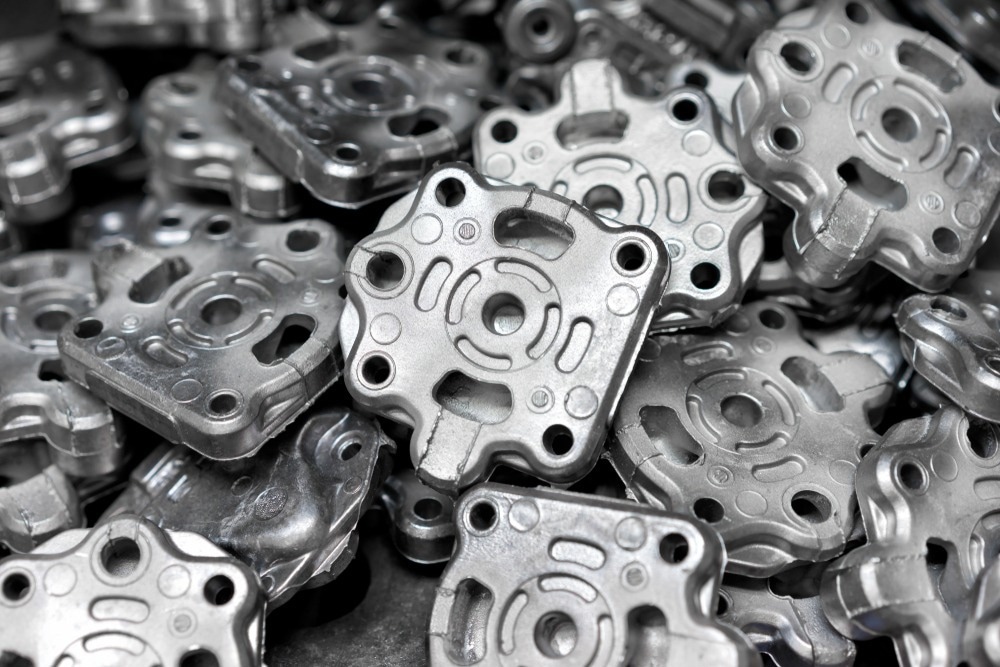
Sand casting offers several advantages over other casting techniques, especially when it pertains to adaptability and cost-effectiveness. This technique allows for the production of complex forms and big elements without the need for expensive tooling. In addition, the sand made use of in this procedure is conveniently available and inexpensive, making it an appealing choice for both small and big production runs. The capability to reuse sand advertises sustainability and reduces material costs. Sand casting fits a selection of aluminum alloys, improving its adaptability for different applications. The procedure is additionally fairly basic, which adds to shorter preparations and versatility in production. These factors make sand casting a favored selection for lots of sectors seeking trustworthy and affordable options.
Die Casting Effectiveness
Various casting techniques are available, pass away casting stands out for its efficiency, specifically in high-volume production scenarios. This technique employs high-pressure forces to infuse liquified aluminum right into a mold and mildew, leading to rapid cycle times and regular product high quality. Compared to sand casting and investment casting, pass away casting considerably lowers material waste and permits elaborate styles with limited tolerances. The ability to generate big amounts of parts quickly makes it excellent for sectors such as automotive and durable goods. On top of that, die casting can assist in using cheaper alloys, further boosting its cost-effectiveness. In general, the performance of die casting makes it a favored option for manufacturers aiming to maximize both production rate and high quality.
Financial Investment Casting Accuracy
Financial investment casting is commonly acknowledged for its phenomenal accuracy in generating complex shapes and complex information. This approach includes creating a wax pattern, which is coated in a ceramic covering, and subsequently dissolved, leaving an accurate cavity for molten aluminum. Contrasted to other casting approaches, such as sand casting or pass away casting, investment casting uses tighter tolerances and a smoother surface coating. This precision makes it optimal for applications requiring high accuracy, such as aerospace and medical device parts. While the initial configuration prices may be greater, the long-lasting benefits consist of minimized machining demands and constant quality. navigate to this site As a result, investment casting attracts attention as a favored choice for detailed designs and requiring requirements in various industries.
Sector Applications of Aluminum Castings
Aluminum castings play a necessary duty throughout countless sectors due to their light-weight, corrosion-resistant residential or commercial properties and superb strength-to-weight ratio. In the automotive sector, aluminum castings are extensively made use of for engine parts, transmission real estates, and structural components, contributing to fuel efficiency and efficiency. The aerospace market gain from aluminum castings in aircraft frameworks, engine installs, and indoor fittings, where weight decrease is important.
Furthermore, the consumer electronics sector makes use of aluminum castings for enclosures and elements, boosting durability while preserving a smooth aesthetic. In the construction industry, aluminum castings are used in architectural aspects, window frames, and architectural assistances, providing durability against weathering. Moreover, the aquatic sector prefers aluminum castings for watercraft hulls and installations as a result of their resistance to saltwater deterioration. On the whole, aluminum castings use flexible remedies, meeting varied needs across numerous applications while maintaining high performance and reliability.
Future Fads in Aluminum Casting Technology
As markets remain to evolve, improvements in aluminum casting innovation are positioned to improve making processes and product style. Emerging patterns include the assimilation of automation and expert system, enhancing manufacturing and boosting top quality control. 3D printing is also gaining traction, permitting much more complicated geometries and minimized waste, consequently advertising sustainability. In addition, the growth of high-performance alloys is increasing the applications of aluminum castings, enabling industries to satisfy extensive efficiency criteria.
Another significant fad is the raising focus on recycling and the round economic climate, with advancements aimed at reusing aluminum scrap successfully. Industry gamers are additionally buying wise manufacturing strategies, including IoT for real-time monitoring and anticipating maintenance. Advancements in surface treatment technologies are improving the resilience and aesthetic allure of aluminum castings. Jointly, these patterns indicate a transformative period in aluminum casting, driving performance, sustainability, and innovation across various industries.
Frequently Asked Questions
What Are the Environmental Influences of Aluminum Casting Processes?
The environmental impacts of aluminum casting procedures include greenhouse gas emissions, power consumption, and waste generation. These elements add to air and water contamination, triggering the need for lasting practices and enhanced source administration in the industry.
Exactly How Can Aluminum Castings Be Recycled Efficiently?
Reliable recycling of aluminum castings involves accumulating scrap, removing pollutants, and thawing the aluminum to create new click for source castings. This procedure preserves energy, lowers waste, and minimizes ecological influences, promoting a much more lasting manufacturing cycle.
What Is the Normal Life-span of Aluminum Castings?
The common life expectancy of aluminum castings varies substantially, commonly lasting between 20 to half a century depending on environmental aspects, alloy make-up, and application. Their toughness makes them suitable for different requiring industrial and structural usages.
Exist Any Health Dangers Related To Aluminum Casting?
Issues concerning wellness risks connected with aluminum casting include prospective exposure to fumes and dirt. Prolonged inhalation may cause respiratory system concerns, while skin call can cause irritation. Proper precaution are crucial to minimize these risks.
Exactly How Do Aluminum Castings Contrast to Various Other Materials in Stamina?
Aluminum castings display a desirable strength-to-weight ratio compared to lots of products, including steel and plastics (Aluminum Casting). They are light-weight yet strong, making them optimal for applications calling for longevity without extreme weight, such as automobile and aerospace parts